
The story
On an island in the sun
The Prologue
Our journey started in Copenhagen, where we took the Öresundståg all the way to Kalmar. After an overnight on our tent somewhere close to Oskarshamn, we took the ferry to Gotland on Saturday morning.
Gotland is one of Sweden’s holiday destinations. July in Visby is packed with Stockholmers ready to party.
The island’s flatness makes the trip generally pleasant - unless the winds shows up. The landscapes evolve and change throughout the different parts of the island.
The north
Stage 1: Visby to Fårösund
We arrived in Visby on Saturday, around 2pm. Sunny and warm weather to start our journey around the island. Getting out of Visby we pass by several bars and a party atmosphere all around. Quickly, we are out and start pedalling north following the coast towards Nyhamn. Given the late start and the fact that we plan to sleep in our tent, our goal is to get as far as we feel.
The landscape is beautiful and we ride through a mix of gravel roads, including some chunky gravel, and quiet backroads. The legs are feeling good and we aim to overnight around Fårösund, prior stop in Bläse for a drink and some food.
Once we arrive in the café, Bläse had other plans for us. They have no electricity due to a blackout and we don’t have cash (remember to bring cash!!! despite Sweden is very cashless, we still found a few places only accepting cash).
Explore Fårö
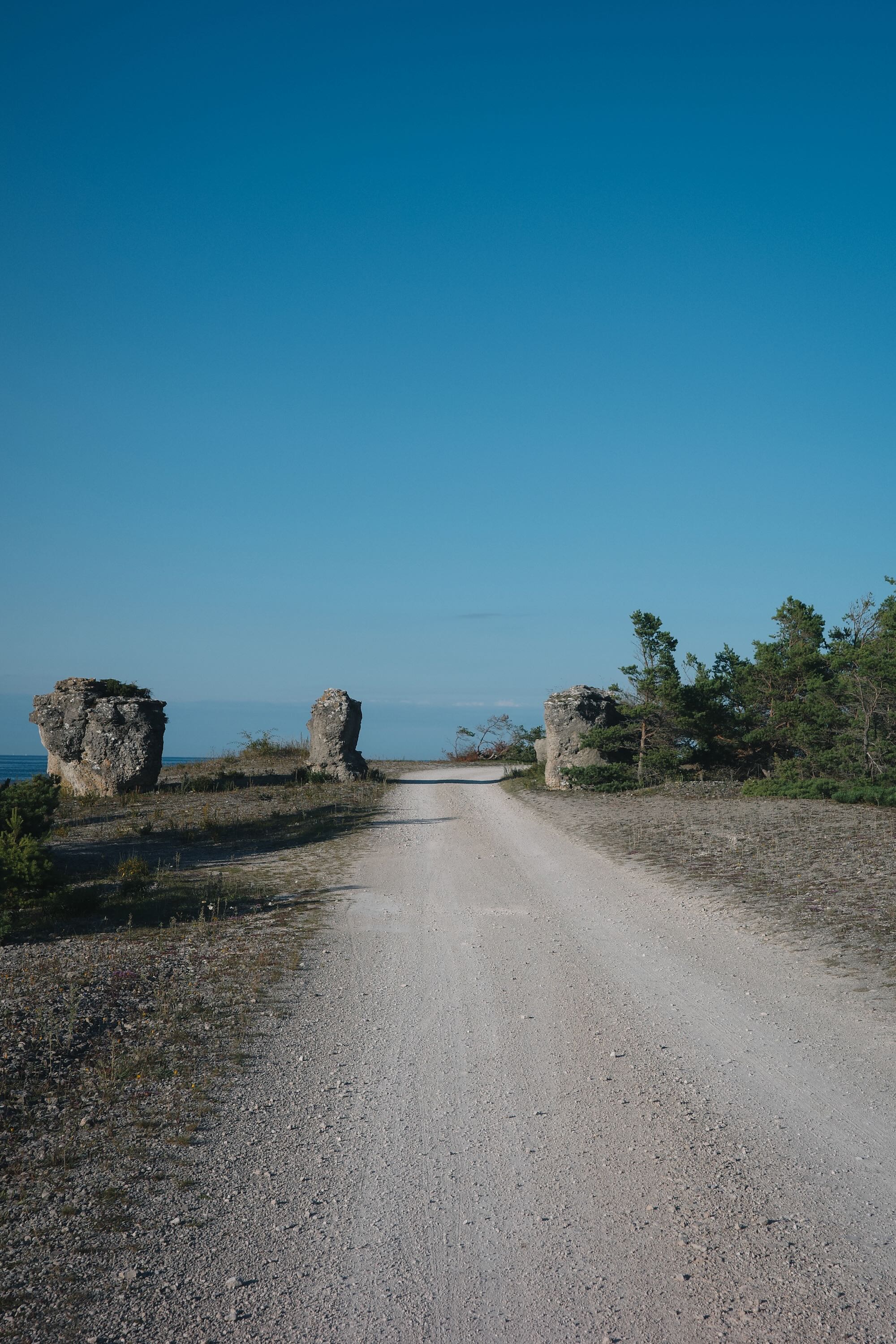
The small ferry to Fårö takes seven minutes and costs nothing for bikes. The island is where Ingmar Bergman lived for the last decades of his life. The raukar — limestone sea stacks worn by millennia of Baltic weather — stand in groups along the northern coast.
We didn’t get to cross as we didn’t research enough apparently. Don’t make the same mistake!
The south — meadows, mead, and medieval
Southern Gotland changes register entirely. Smaller farms, older churches — there are over 90 medieval churches on the island — and roads through forests of pine and birch that narrow to single track in places.
The logistics
The ferry from Oskarshamn takes around three hours, while the one from Stockholm (Nynäshamn) takes roughly five. Book in advance in July and August. Camping is abundant. The Swedish right of public access (allemansrätten) means you can also pitch almost anywhere that isn’t fenced private land.