
The story
An island that earns its reputation for light
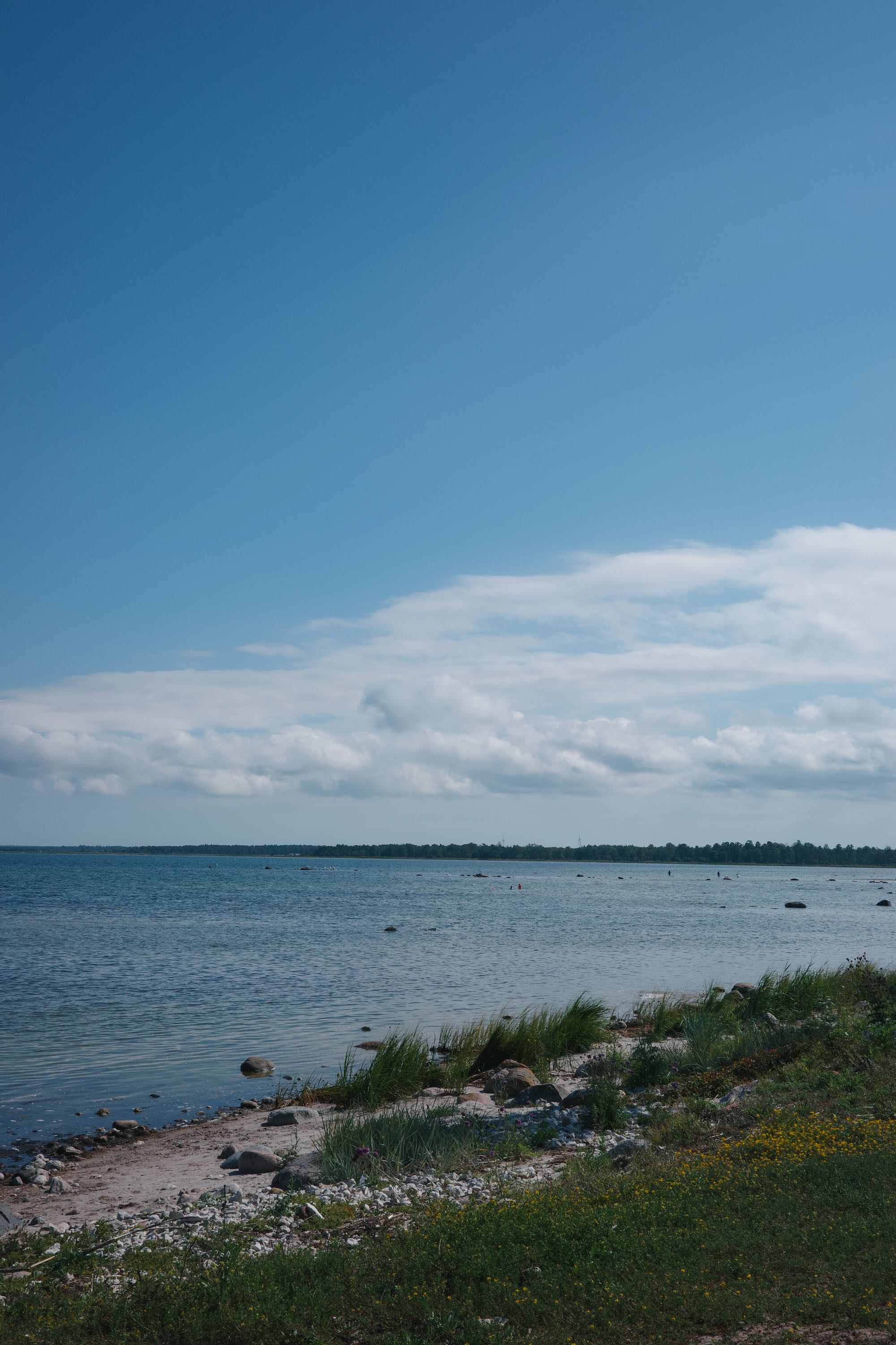
We arrived by overnight ferry from Stockholm, bikes strapped to the lower deck, sleeping in reclining chairs we would not have chosen voluntarily. By the time the bow crept into Visby harbour at six in the morning, the sky was doing something unreasonable — pale orange on grey limestone, the old city walls catching the first sun like a stage set nobody warned us about.
Gotland has a reputation in Sweden as the holiday island, the place where Stockholmers go in summer to eat lamb, drink rosé, and see other Stockholmers. We were not here for that, though we would end up doing most of it anyway.
“The road north out of Visby follows the coast so closely you can hear the Baltic before you see it — a low, continuous sound, like a city in the distance that never arrives.”
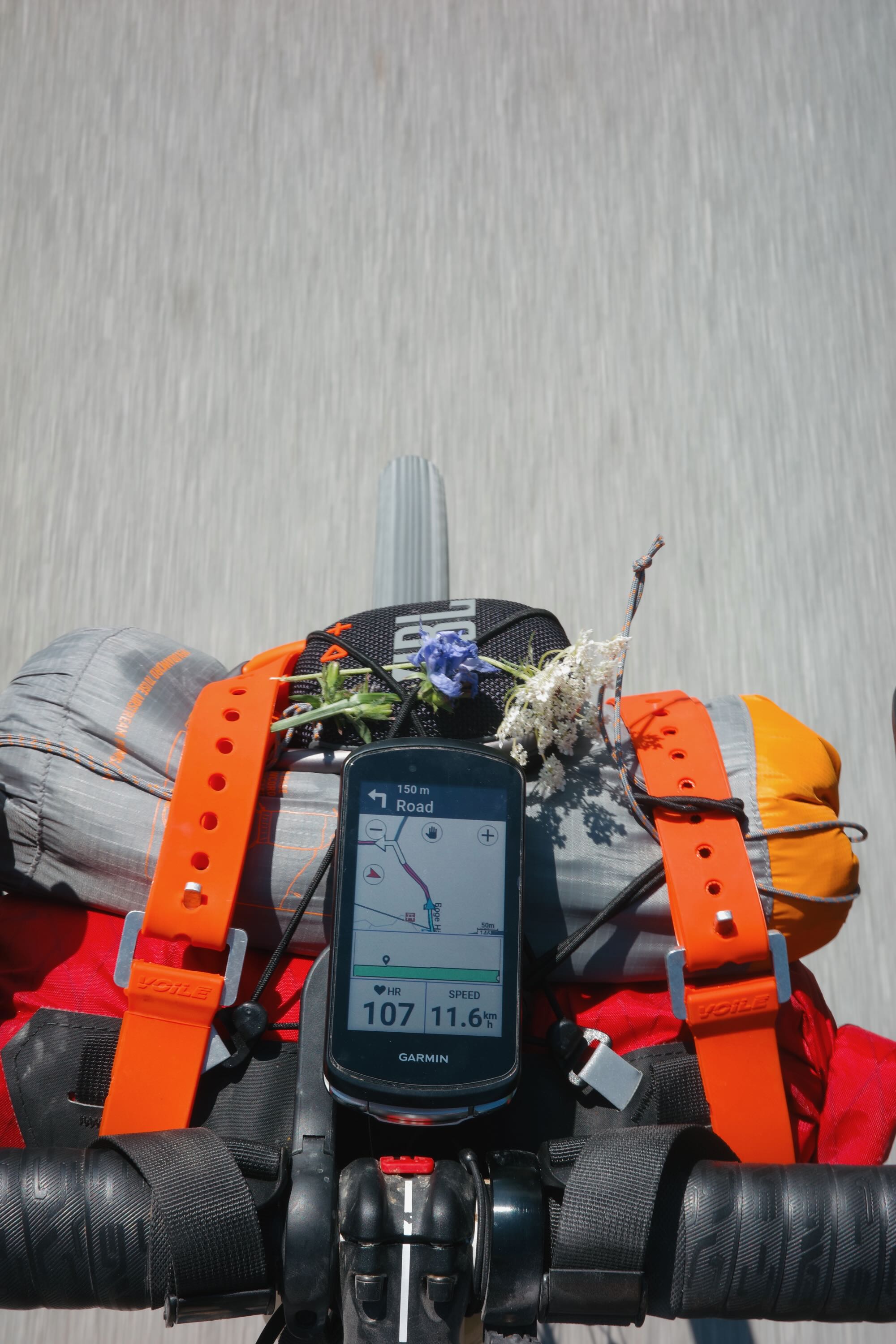
The island’s flatness is a specific kind of relief after months of climbing routes. Not boring flat — working flat. The kind where you feel the wind as the actual terrain. On our first morning heading north, a headwind out of the northeast turned a 90 km day into something that required more attention than the elevation profile had suggested.
The north — Fårö and the silence of rock
The small ferry to Fårö takes seven minutes and costs nothing for bikes. The island is where Ingmar Bergman lived for the last decades of his life, and it wears that association without trying: stone fields, old fishing sheds the colour of dried blood, a horizon that feels closer than it should.
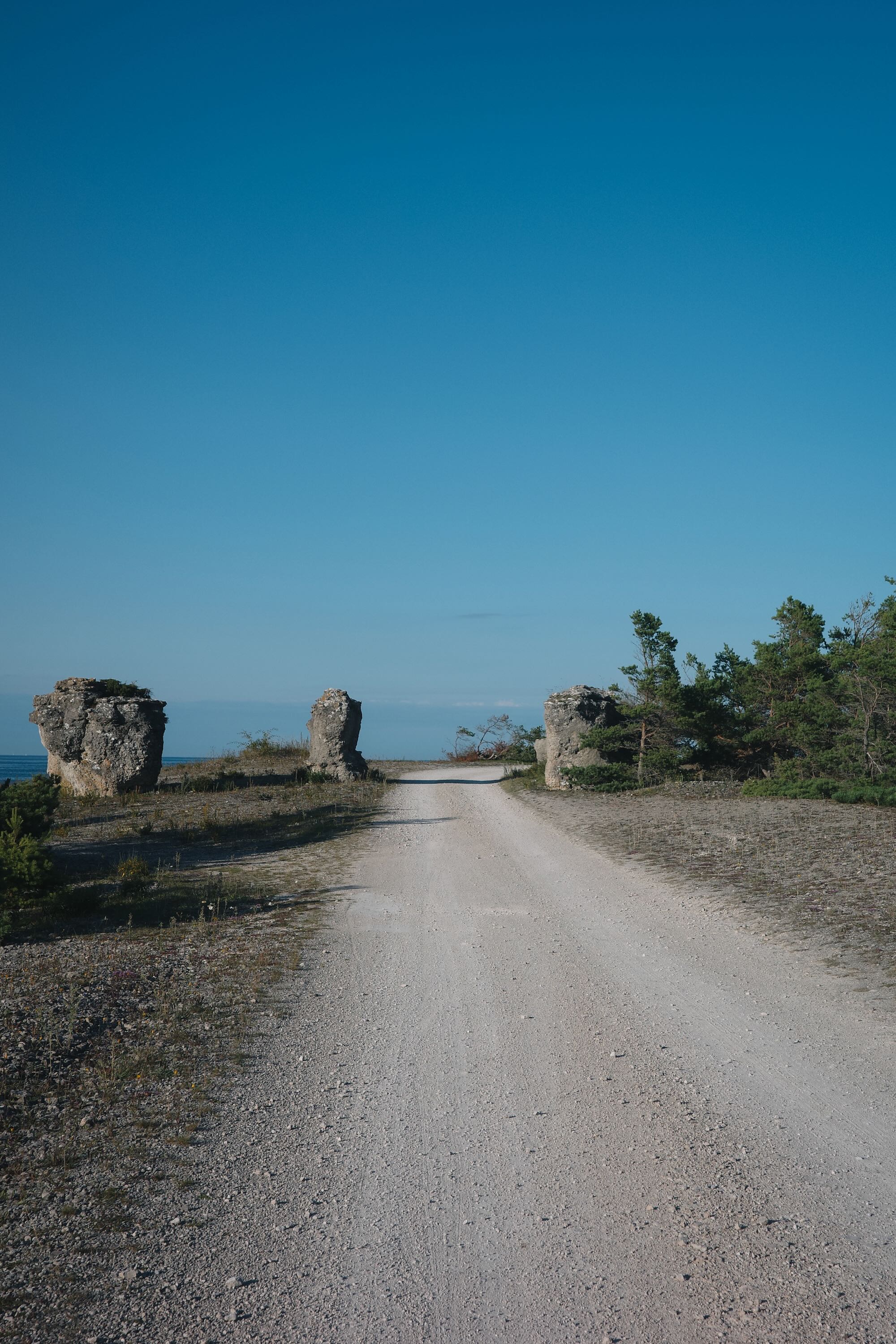
We rode the gravel loop around Fårö in an afternoon. The raukar — limestone sea stacks worn by millennia of Baltic weather — stand in groups along the northern coast like an audience watching something that already happened.
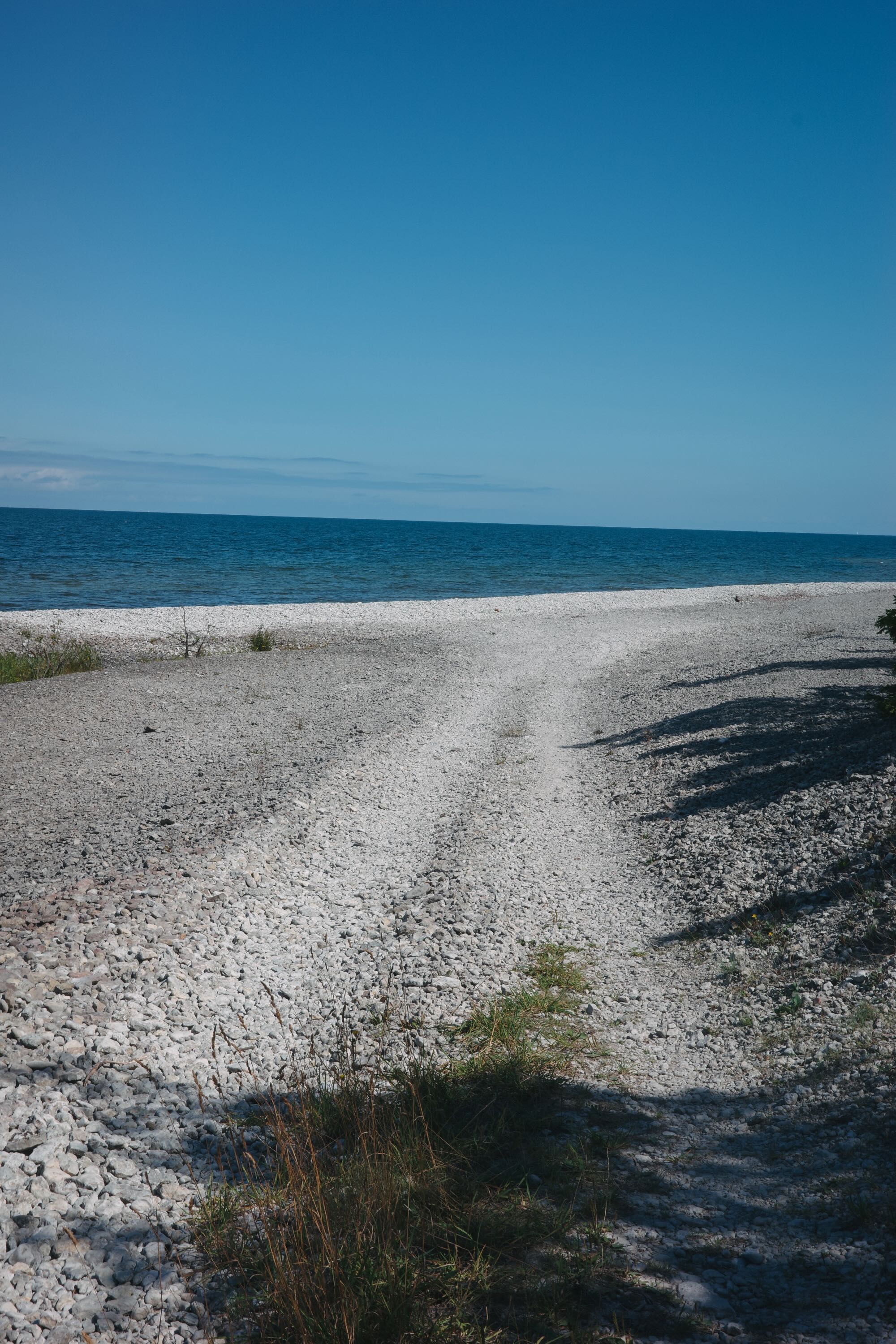
The south — meadows, mead, and medieval
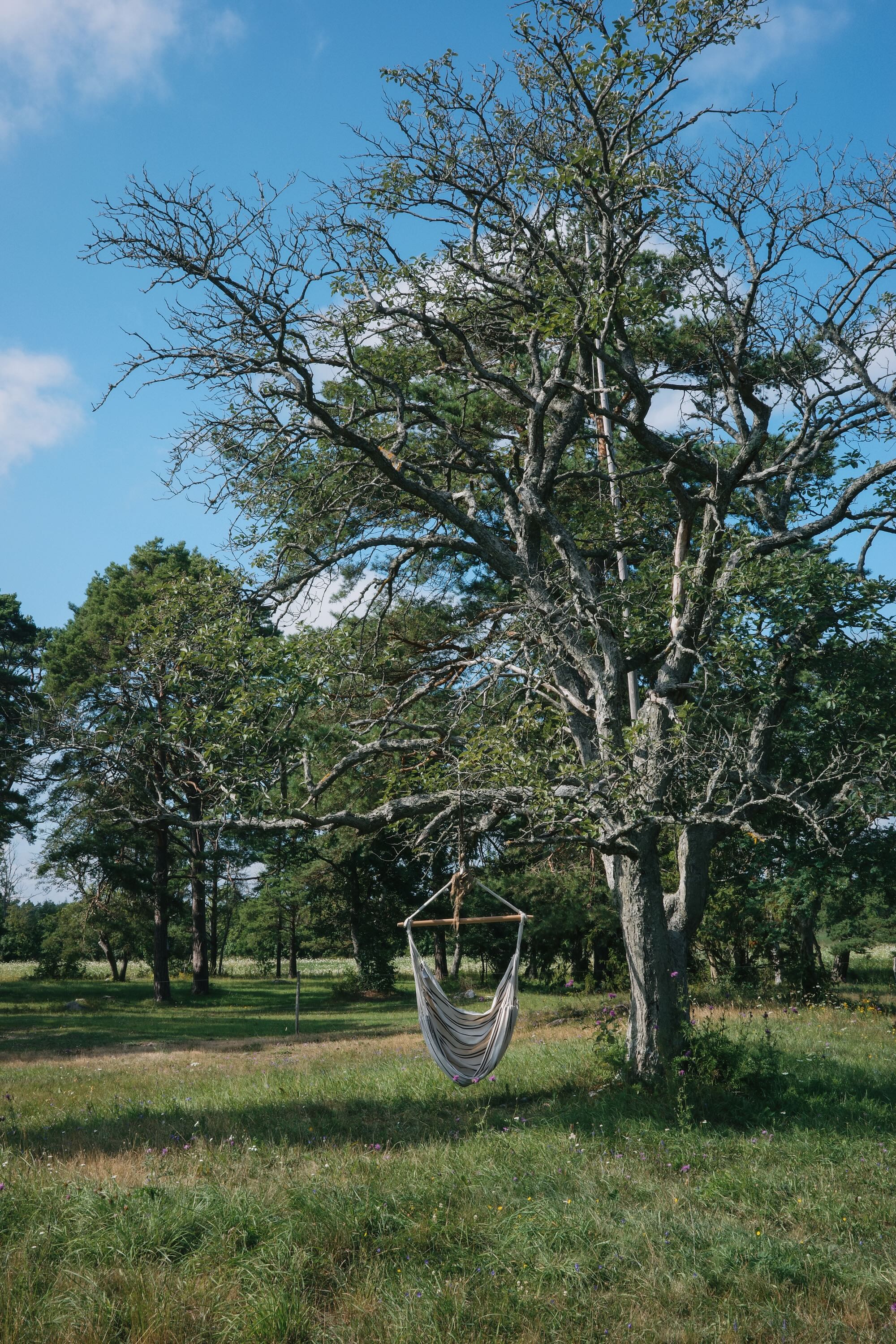
Southern Gotland changes register entirely. Smaller farms, older churches — there are over 90 medieval churches on the island — and roads through forests of pine and birch that narrow to single track in places.
We stopped at a farm selling local mead from a table outside, unstaffed, run on the honour system. We left money and carried bottles we hadn’t planned to carry. This is, we have found, a recurring feature of Nordic bikepacking.
The logistics
The ferry from Stockholm (Nynäshamn) runs overnight and takes roughly five hours. Book in advance in July and August. Camping is plentiful. The Swedish right of public access (allemansrätten) means you can also pitch almost anywhere that isn’t fenced private land. Resupply every 20–40 km throughout.